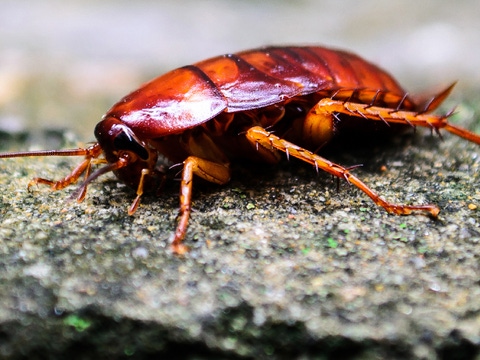
Close up of red cockroach enjoying sun

BASF Professional & Specialty Solutions

Cockroaches

Open lightbox

Cockroaches present one of the most significant public health risks, carrying a variety of harmful diseases. BASF offers solutions with a combination of quick control and long-lasting results.

Damages caused / challenges                 

A concern wherever food is stored processed or served

Cockroaches are pervasive, elusive and prolific. They are associated with numerous pathogenic organisms, a source of human allergens and are invariably suggestive of poor hygiene. As such, their presence in domestic kitchens, hospitality outlets and food related industries is unacceptable.

Open lightbox

Challenging control conditions

The challenges of modern cockroach control make a single round of treatment unlikely to provide sufficient, sustained control. Even under the best field conditions, the natural behavior of cockroaches rarely makes it possible to control more than 80% of any population from a single baiting.

Profile cockroach species comparison

                                  German cockroach Oriental cockroach American cockroach
Scientific name  Blatella germanica Blatta orientalis Periplaneta Americana
Length 10-15 mm 20-25 mm 30-40 mm
Colour light-mid brown brown-black reddish brown
Wings male/female reduced/vestigial male/female


Agility

Moves equally well on both horizontal and vertical surface Less good at climbing vertical surfaces than the German cockroach Climbs well
Life cycle 63-128 days 75-300 days 630-720 days


Harbourage

Commonly found in homes, kitchens, restaurants, ships, etc.

Also found in household appliances, in refuse chutes and behind wallpaper
Typically found around the ground-floor of buildings, although can be found higher

Harbourages are often located outside the “infested area” and under-floor cavities, ducting or drains are used to forage internally
Typically found in drains, ducts and in other underground structures

Often harbour outside of the building, but will typically forage into the inhabited parts of the buildings along ducts and crevices

Profile general

Environment Prefer a dark and concealed environment
Prefer warm temperatures and high humidity
Diet Preference for high energy foods
Can survive for nearly 45 days without food, providing water is available
Social organisation Cluster together in large numbers wherever a combination of food, water, warmth and shelter are available in close proximity

How to conrol

Planning the Best Control

In most cases, sustained control requires an integrated approach based on a sound understanding of cockroach behavior, thorough inspection, good hygiene, and a programme of treatments. This includes follow-up baiting, and crack and crevice treatment where necessary.

Open lightbox

Inspection

Because cockroaches cluster together in protected harbourages and forage primarily at night, a thorough inspection of infested areas is essential.

Inspections are best conducted at night with a torch and a small flexible mirror to examine less accessible areas for excrement, shed skins and old egg capsules as well as live cockroaches.

Pyrethroids sprayed into cracks and crevices can also be very effective in identifying occupied sites by temporarily flushing cockroaches into the open.

Sticky traps offer the best way of establishing the level and location of infestations in most cases. They should be placed in areas commonly frequented by foraging cockroaches. Particular attention should be paid to warm, moist places such as the underneath of fridges or other appliances, wall/floor junctions, around the edges of fittings and equipment, and beneath furniture etc.

Cleaning

Cockroach infestations are invariably larger and more difficult to control where sanitation is poor.

Restricting food and harbourages can be a valuable aid to cockroach control, while clean surfaces in the vicinity of baits generally improve control by reducing alternative sources of food and water and increasing the likelihood of bait contact.

Populations may be reduced or disrupted by removing clutter or heavily infested furniture and appliances.

Bait placement

The effectiveness of insecticide baits depends on the foraging individuals consuming them. This makes it important to use baits that are highly palatable and maintain their palatability over an extended period.

The restricted foraging range of most cockroaches means the effectiveness of baits can be seriously compromised by poor placement. To be effective they must be located as close as possible to every cockroach harbourage in an infested area.

Bait points placed within the warm, damp and dark areas that foraging cockroaches love are likely to be most effective. Removing access panels rather than just baiting on external surfaces is advisable in many cases.

Integrated treatment

Baits have become the treatment of choice in most control programs due to their convenience, relative lack of preparation and minimal client disruption – both in terms of time as well as odour and exposure issues.

A bait needs to be very attractive for foraging cockroaches to find and consume it in the presence of competing food sources. An active ingredient that provides a cascade effect also ensures complete and quick control of the colony.

Where the pressure is on for the most rapid, total control – as it tends to be in restaurants and public food outlets – well targeted crack and crevice treatment can be a very valuable complement to baiting to tackle non-foraging adults and nymphs.

Minimising insecticide resistance or bait aversion

To minimise the chance of cockroaches developing either insecticide resistance or bait aversion, it is advisable not to use a single bait active ingredient or formulation as the single means of control over an extended period in the same location.

Supporting gel baiting with crack and crevice treatment can avoid this situation without the complication of bait rotation.

You might be interested in:

Related Products

Information: Use biocide products carefully. Always read the label and product information before use.