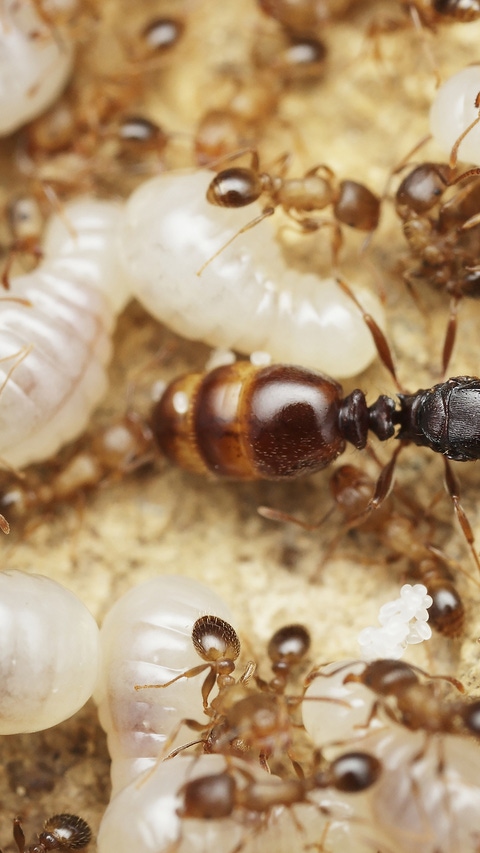
Ant queen inside the ant nest with workers and larvae of new generation of queens ; Shutterstock ID 462790651; Projekt-/Jobnummer: insecticide update; Projekt: ; Abteilung: ; Bestellt durch/Weitere Informationen:

BASF Professional & Specialty Solutions

Ants                                                     

[Formicidae]                                                                            

portrait of ant formica rufa; Shutterstock ID 80959987; Projekt-/Jobnummer: -

Ants can be a serious nuisance in homes, hospitality outlets and businesses. Their social organisation, diversity and adaptability have made them a priority for pest control specialists and homeowners alike.

Damages caused / challenges      


A serious nuisance

The vast majority of ants live outdoors and perform a range of usual functions but problematic species attracted to human and pet foods with high sugar and protein contents typically cause pest problems.

When ants begin to infest homes and attack people in gardens and parks, they fall into the category of a nuisance pest. Some species can also be a public health problem and can short circuit electrical components enough to cause fires.

Closeup view of ants on a cupcake

Highly successful insects

Ants owe much of their success to their advanced social structure. Clear divisions of labour between workers – scouts, foragers, larvae feeders and sentries, as well as between workers, queens and drones (reproductive males) make for highly efficient colony establishment, development and survival.

Their success in communicating leads to the well-travelled ant trails between nest sites and their various food sources that characterise most infestations. Trails become more persistent and difficult to disrupt with increasing use.

Profile

Scientific name Formicidae
Appearance Workers measure 1,5-5 mm (depending on the species)


Diversity

10,000-plus ant species known to exist, approximately 180 identified in Europe

Species commonly found in Europe include:
Black garden ant (Lasius niger)
Yellow ant (Lasius flavus)
Pavement ant (Tetramorium caepsitum)
Carpenter ant (Campanotus sp.)
Pharaoh ant (Monomorium pharaonis)
Argentine ant (Linepithema humile)

Reproduction

and life cycle

Once the colony is established, queens lay continuously
Average colony size for the black garden ant is around 4,000-7,000 ants, other species can create meta colonies with 300.000 individuals
Diet Sugar- and protein-rich food for problem species such as black garden, yellow and pavement ants
Social organisation Foragers hunt out new food sources within up to 90 meters of the nest (depending on the species) and scouts lay down pheromones followed by foragers.
Foraging workers then continuously carry food back to the colony , depending on species. As well as consuming it themselves, they share the food with all the non-foraging adults and developing larvae in a process known as trophallaxis.

How to control
Pest control professionals need to follow several essential steps in order to efficiently control ants

Establishing the extent and location of the infestation

A thorough inspection of the premises in dry weather is required to identify the level of infestation, species of ant (where possible), main trails and access points.

External ant trails need to be traced back as close to the nest as feasible, bearing in mind that trails may be very difficult to locate when conditions are wet.

Control strategy

Effective control of social insects like ants can only be achieved through measures which eliminate both the queens and their broods. Exclusion of foraging workers from food sources or their elimination – either physically or by chemical treatment – is rarely,  if ever, sufficient to give more than temporary respite from most infestations.

Although generally ineffective on their own, physical means of excluding ants from buildings or food sources are cruical alongside chemical controls. This is especially noticeable in guarding against re-infestation from new colonies around sensitive locations.

Physical controls

The most effective measures include:

  • Ant-proof storage of foods in truly sealable containers
  • Regular cleaning of floors and surfaces to remove spillages and scent trails
  • Proper disposal of kitchen scraps and food waste
  • Permanent sealing of access points
Open lightbox

Treatment programme

Related Products

Information: Use biocide products carefully. Always read the label and product information before use.